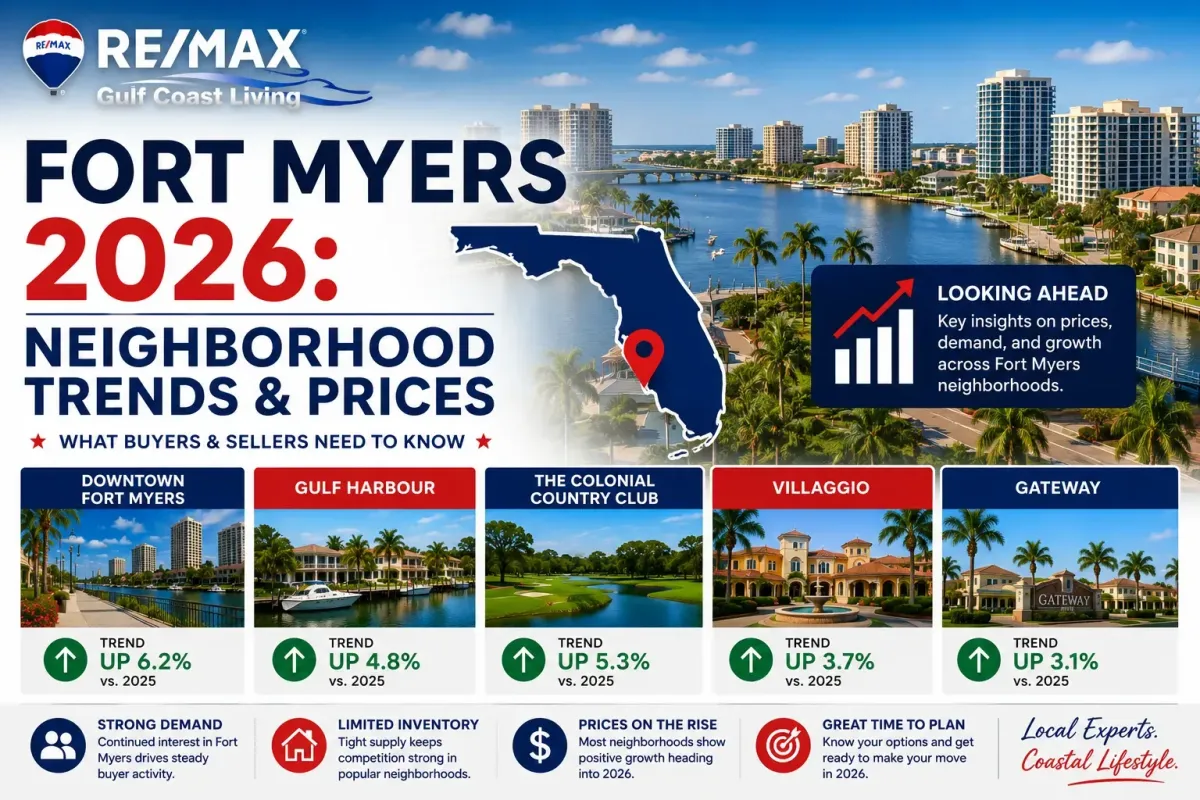
Fort Myers 2026: Neighborhood Trends & Prices
Fort Myers 2026: Neighborhood Trends & Prices
Table of Contents
1. Soaring Neighborhood Hotspots in Fort Myers
San Carlos Park and surrounding areas
San Carlos Park continues to attract buyers seeking value with convenient access to I-75 and fresh supply in nearby suburbs. Median prices have shown resilience as demand remains steady and new listings periodically refresh the market. In 2026, Lee County’s broader growth and infrastructure plans support continued buyer interest across Fort Myers and surrounding areas.
Key factors include affordable entry points, family-friendly neighborhoods, and expanding service amenities within a short drive to Fort Myers core. For more information, check out our neighborhood guides for Fort Myers.
Downtown Fort Myers and Fort Myers River District
Downtown Fort Myers and the River District are trending up as buyers chase walkable streets, dining, and cultural amenities. Activity here often translates to faster price progressions and stronger resale liquidity. The broader Cape Coral-Fort Myers metro area continues to attract investors and buyers seeking diversified options across coastal and suburban settings. MLS data supports these patterns by providing standardized, apples-to-apples comparisons across neighborhoods.
Expect continued infill development and investment in historic districts, with buyers prioritizing proximity to waterfront parks and entertainment options.
Gulf-access and waterfront communities
Communities with gulf-access canals and waterfront lots remain highly desirable for boating enthusiasts and upscale buyers. These areas typically command premium pricing and robust demand, even in slower markets.
Residents benefit from scenic views, marina access, and proximity to top-tier schools and services, reinforcing their appeal in 2026.
2. Price Trajectories by Neighborhood in 2026
Comparative analysis: Fort Myers vs. North Fort Myers
Fort Myers proper generally reports higher median values linked to downtown and riverfront access. North Fort Myers offers affordability and steadier demand within a longer price cycle.
Days on market reflect momentum variations: well-priced listings move quickly in some submarkets, while others show wider spreads as buyers weigh location and condition.
3. Inventory and Demand Dynamics in 2026
Buyer activity by neighborhood
buyers attracted to walkable streets and amenities maintain steady demand from buyers, even as inventory grows.
Waterfront and gulf-access areas draw niche buyers, with activity strongest where marina access meets solid schools.
Suburban pockets like San Carlos Park continue to attract first-time buyers seeking value and newer infrastructure.
4. Affordability and Financing Trends for Fort Myers Buyers
Down payment and loan options for Southwest Florida markets
Conventional loans remain common for buyers with solid credit and 10-20% down, balancing equity with favorable rates.
First-time buyer programs and VA loans can reduce upfront costs, subject to eligibility.
Affordable housing and large lots/acreage available may be accessible through down payment assistance in specific neighborhoods and for first-time purchases.
5. Neighborhood Profiles: Community Character and Value
Family-friendly neighborhoods and schools
Younger families and moved-in professionals are prioritizing areas with strong schools and safe streets. Look for communities with active parent networks, after-school programs, and nearby elementary to high school options. These factors influence long-term value and resale potential. GreatSchools ratings can help compare school quality across neighborhoods and inform buyer decisions.
Key considerations include district rankings, school feeder patterns, and any recent improvements to campus facilities. Homes in well-regarded zones tend to hold value even as market cycles shift.
Lifestyle factors: amenities, parks, and access
Walkable town centers with shops, cafes, and cultural venues boost daily convenience.
Extensive park systems and waterfront access add recreational appeal for weeknights and weekends.
Road networks, bike lanes, and public transit access shape commute times and overall quality of life.
Communities with integrated fitness and social spaces often see steadier demand, especially from buyers seeking turnkey lifestyle options.
Future development and infrastructure plans
Upcoming road projects and bridge improvements can shorten commutes and unlock new submarkets.
New schools, medical facilities, and retail hubs often accompany large master-planned projects.
Energy efficiency upgrades and flood-mitigation investments may influence insurance costs and long-term ownership costs.
6. Seller Guidance: Pricing, Staging, and Negotiation in 2026
Pricing accurately in a shifting market
Pricing remains a critical lever as markets recalibrate and buyers scrutinize value. Use current comps, time-on-market data, and recent price adjustments to ground your expectations. Listings that reflect real-time market realities tend to attract qualified interest more quickly.
Staging and presentation to maximize value
Highlight upgrades and energy efficient features that matter to today’s buyers.
Prioritize curb appeal and interior lighting to create strong first impressions.
Pair clear photography with a concise property narrative to answer common questions.
Well-presented homes often yield stronger offers even when price growth is modest. Staging should be intentional, showcasing rooms for lifestyle relevance to target buyers.
Negotiation strategies in a balanced market
Define contingencies and timelines up front to keep negotiations moving.
Prepare multiple offer scenarios, including variations in price, financing, and closing terms.
Use current inventory dynamics to encourage realistic offers without compromising value.
Smart sellers pair precise pricing with thoughtful presentation and flexible negotiation to maintain momentum in 2026.