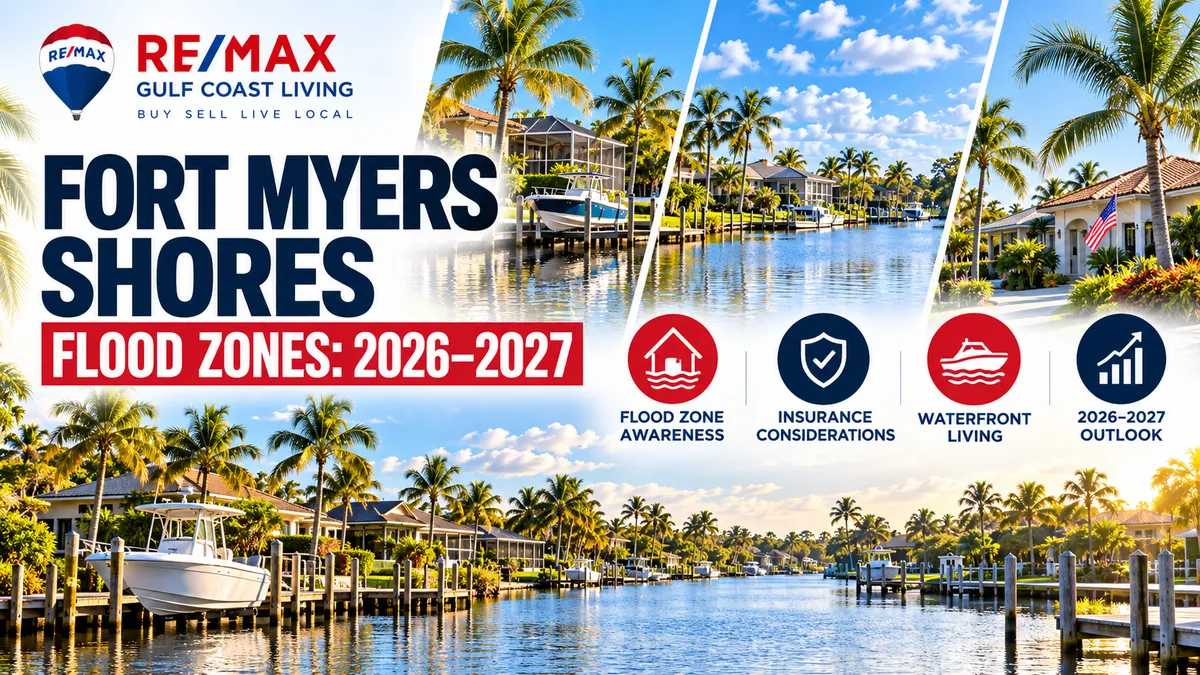
Fort Myers Shores Flood Zones: 2026-2027 Guide
Fort Myers Shores, Flood Zones, Home Buying, RE/MAX Gulf Coast Living
Fort Myers Shores Flood Zones: Honest Guidance for 2026–2027 Home Buyers
Thinking about buying in Fort Myers Shores but worried about flood risk, insurance costs, and future rules? You’re not alone. As local agents with RE/MAX Gulf Coast Living, we live and work here every day, and this guide is designed to give you clear, no-nonsense information so you can decide if Fort Myers Shores is the right fit for you.
Why Flood Risk Varies So Much in Fort Myers Shores
One of the biggest surprises for buyers is how two homes just a few streets apart in Fort Myers Shores can have very different flood risks and very different insurance premiums. That’s not an accident. It comes down to a mix of location, elevation, and construction details that FEMA and insurers now look at much more closely than they did years ago.
Fort Myers Shores sits only about three feet above sea level, which means the overall community is vulnerable to river flooding and storm surge. Climate Central’s Surging Seas data shows roughly a 53% chance of at least a four‑foot flood by 2050, and about 570 residents currently live on land below that level. Yet within the neighborhood, risk is not uniform. Some streets are closer to the Caloosahatchee River, some are slightly higher, and some homes were built or elevated to more modern standards after earlier flood maps were adopted.
FEMA’s Flood Insurance Rate Maps (FIRMs) divide the area into zones like AE, A, and X. Properties in AE or A are in a Special Flood Hazard Area (SFHA), where lenders usually require flood insurance. Homes in X (shaded or unshaded) are considered moderate to lower risk, and insurance is typically optional—but that does not mean “no risk.” These maps are being updated, and new FIRMs for unincorporated Lee County are scheduled to take effect March 2, 2027, which could change zones and required building elevations for some Fort Myers Shores properties. You can read more about those changes on Lee County’s official flood page at leegov.com/dcd/flood.
Beyond the map, two similar-looking houses can perform very differently in a flood depending on how high the finished floor is, how old the structure is, and where mechanicals like A/C and electrical panels are placed. That’s why we always tell our buyers: don’t judge flood risk by curb appeal alone. The details behind the scenes matter more than the view from the street.
💡 Local Insight: In our Fort Myers community guide and nearby area posts like our Alva post, we break down how river proximity, age of construction, and elevation all play into long‑term risk and costs.
How to Look Up a Home’s Flood Zone
Before you fall in love with a house in Fort Myers Shores, it’s smart to check its current flood zone and how that might change in 2027. You don’t need special software—just a few free tools and a little patience. Here’s a simple step‑by‑step approach we walk our buyers through all the time:
Start with FEMA’s Map Service Center. Go to msc.fema.gov, enter the property address, and view the current Flood Insurance Rate Map. This will show you whether the home is in an A, AE, X, or other zone, and it will display the Base Flood Elevation (BFE) for that panel where applicable.
Use Lee County’s “Find My Flood Zone” and Forerunner tools. Lee County offers buyer‑friendly tools at leegov.com/dcd/flood. From there, you can access the Find My Flood Zone app and the Forerunner Floodplain Resource Portal, which often provide more parcel‑specific details, including current and future flood zones and BFEs for properties in Fort Myers Shores.
Confirm with your lender and insurance agent. Even if the maps show an X zone, your lender may have its own risk standards. A good insurance agent can plug the address into their system and give you a preliminary quote that reflects FEMA’s Risk Rating 2.0, elevation, and distance to water—not just the letter on the map.
Ask your agent for local context. The maps tell you regulatory risk, but they don’t tell you which streets actually took water in past storms. That’s where working with local agents like our RE/MAX Gulf Coast Living team makes a difference. We know which parts of Fort Myers Shores saw flooding during recent events and which held up better than expected.
📌 Key Takeaway: Always check both FEMA’s map and Lee County’s tools, then layer on local experience before making a decision.
The Elevation Certificate: The Most Important Document You’ve Never Heard Of
If flood maps tell you the zone, an Elevation Certificate (EC) tells you how that specific house sits relative to the Base Flood Elevation. For homes in Fort Myers Shores that are in an A or AE zone, this can be the difference between an affordable policy and a shockingly high one—or even whether you can get certain improvements permitted without major upgrades.
An Elevation Certificate is prepared by a licensed land surveyor or engineer. It documents key measurements like the elevation of the lowest finished floor, attached garages, and mechanical systems, all compared to the BFE on the FEMA map. Insurers use this information to set your flood premium under FEMA’s Risk Rating 2.0 and many private policies. In some cases, if the structure is naturally above the BFE, an EC can support a Letter of Map Amendment (LOMA), which may move the structure out of the high‑risk zone for insurance purposes.
Where do you find an Elevation Certificate? Sometimes the seller already has one, especially if they bought or refinanced after earlier storms or if they’ve shopped for better insurance rates. Lee County’s Forerunner portal may also have ECs on file for some properties. If not, you can hire a local surveyor to complete one. In our experience, the cost is often worth it, particularly if:
The home is in an AE or A zone, and you plan to carry a mortgage.
You’re comparing NFIP and private flood insurance options and want accurate quotes.
You’re considering additions or major renovations that could trigger Lee County’s 50% Rule.
💡 Pro Tip: When we represent buyers, we routinely request the seller’s Elevation Certificate during the inspection period and, if needed, help coordinate a new one so you can make an informed decision before your financing and insurance deadlines.
Florida’s Seller Flood Disclosure: What Sellers Must Tell You
Florida has moved toward more transparency around flood risk and flood history. While the exact language can evolve, the state now expects sellers to provide more direct disclosure about a property’s flood exposure, damage, and insurance claims. Florida Realtors has detailed guidance for sellers and agents in its flood disclosure resources, which you can review through their article on seller flood disclosure (searchable via the Florida Realtors site).
In practical terms, when you buy in Fort Myers Shores, you should expect to receive written information about:
Whether the property is in a FEMA‑designated flood zone that may require insurance.
Whether the seller has ever received federal disaster assistance or flood insurance payouts for the property.
Known past flood damage or water intrusion issues, including from storms and heavy rain.
Disclosure forms are helpful, but they’re not a substitute for your own due diligence. Sellers may not know every detail of the home’s history, especially if they’ve owned it only a short time. That’s why our team at RE/MAX Gulf Coast Living combines written disclosures with local knowledge, public records, and neighbor feedback whenever possible. We want you to understand not just what’s on paper, but how the home actually performed in real‑world storms.
Flood Insurance in 2026–2027: What Fort Myers Shores Buyers Need to Know
Flood insurance pricing has changed significantly under FEMA’s Risk Rating 2.0. Instead of basing premiums mainly on zone and elevation, rates now also reflect distance to water, frequency of flooding, and replacement cost. For Fort Myers Shores buyers, this means you can’t just assume “AE zone equals X dollars” anymore—but we do have some helpful benchmarks and tools to guide you.
Statewide, the median NFIP flood premium in Florida is hovering around $1,000–$1,100 per year, according to 2026 data. Median premiums vary by zone: Zone AE policies often land above $1,200, while some A and X zone policies can be below $800. Remember, those are medians; individual homes in Fort Myers Shores can be higher or lower depending on elevation and structure details. You can explore general cost information and coverage basics at floodsmart.gov, FEMA’s official consumer resource.
In addition to NFIP coverage, private flood insurance has grown in Florida. Many private carriers and surplus lines insurers now write policies that may offer higher coverage limits, additional living expenses, or competitive pricing. Florida’s Office of Insurance Regulation has reported that some private insurers are even filing for rate decreases going into 2027. It’s worth shopping both NFIP and private options, especially for higher‑value homes or those with good elevation data. For state‑backed options, you can also review information at citizensfla.com/flood.
One important note if you insure through Citizens Property Insurance: Florida law is phasing in mandatory flood insurance for many Citizens policyholders. By January 1, 2027, most personal‑lines residential policies with Citizens will require flood coverage, regardless of zone. That can impact buyers who plan to rely on Citizens for wind or homeowners coverage in Fort Myers Shores, especially if they’re purchasing older homes or properties with past claims.
💡 Pro Tip: During your inspection period, we encourage buyers to get actual flood quotes from both NFIP and private carriers, not just estimates. We can connect you with local insurance professionals who understand Fort Myers Shores and can walk you through options for 2026–2027 and beyond.
Lee County’s 50% Rule: Why It Matters for Older Homes
Many Fort Myers Shores homes were built before current floodplain standards. That doesn’t automatically make them bad buys, but you do need to understand Lee County’s “50% Rule” before planning big renovations. This rule comes from the National Flood Insurance Program and is written into Lee County’s land development code for structures in Special Flood Hazard Areas (A, AE, VE, etc.).
In simple terms, if a home in a flood zone is below the required elevation and you want to repair, remodel, or add on, the county will compare the cost of that work to the structure’s market value (excluding land). If the cost of improvements or repairs equals or exceeds 50% of the structure’s pre‑project value, the home is considered “substantially improved” or “substantially damaged.” At that point, you are generally required to bring the entire structure into full compliance with current flood and building standards—which may mean elevating the home, changing foundation systems, or making other significant upgrades.
Lee County may use either the value from the Property Appraiser (via a Tax Roll Value Letter) or an independent appraisal to determine the structure’s value. The 50% calculation is then based on a detailed cost estimate for the proposed work. For some buyers, this rule is a non‑issue; they plan simple cosmetic updates that fall well below the threshold. For others—especially those dreaming of gut renovations—it can be a major factor in whether a particular Fort Myers Shores home makes sense. You can read more about the rule and process at leegov.com/dcd/flood.
📌 Key Takeaway: Before you buy a “fixer‑upper” in a flood zone, talk with your contractor, your insurance agent, and a local Realtor who understands the 50% Rule. Our team can help you estimate whether your renovation plans are likely to trigger substantial improvement requirements.
Questions to Ask Before You Make an Offer in Fort Myers Shores
Once you’ve found a home you love, it’s time to dig into the details. Here are key questions we encourage our Fort Myers Shores buyers to ask before writing an offer:
What is the current FEMA flood zone and Base Flood Elevation? Confirm using msc.fema.gov and Lee County’s tools, and ask how the new 2027 maps may affect this property.
Is there a recent Elevation Certificate? If so, review it with your insurance agent. If not, discuss whether to request one from the seller or order your own during the inspection period.
Has the home ever flooded? Ask for written disclosure and, when possible, talk to neighbors. Ask specifically about water inside the living area versus yard or street flooding.
What are current flood and homeowners insurance costs? Request copies of the seller’s most recent policies and premiums, then get your own quotes from NFIP and private carriers at today’s rates.
Will my renovation plans trigger the 50% Rule? If you’re planning major upgrades, have a contractor rough out costs and compare them to the county’s structure value before you close.
How did this street perform in recent storms? This is where local knowledge is crucial. Our agents at RE/MAX Gulf Coast Living can share what we’ve seen on Palm Beach Blvd, in nearby Buckingham and Alva, and across other Fort Myers neighborhoods.
Why Many Buyers Still Choose Fort Myers Shores
With all this talk about flood zones and regulations, you might wonder why Fort Myers Shores is still so popular. The answer is simple: for many buyers, the lifestyle and value outweigh the added homework around flood risk—especially when they have the right guidance.
Fort Myers Shores offers river‑area living at a price point that’s often more attainable than some of the more built‑out waterfront communities. You’re close to downtown Fort Myers, I‑75, and jobs, with quick access to boating, fishing, and all the amenities of the Caloosahatchee River corridor. Buyers who also explore nearby areas like Buckingham and Alva often come back to Fort Myers Shores for its combination of convenience and value.
Many residents are comfortable accepting and managing flood risk with the right insurance and mitigation. They invest in features like elevated A/C units, improved drainage, and flood‑resistant materials. Others prioritize homes on slightly higher ground or with strong elevation data. The key is not to ignore risk, but to understand it clearly so you can decide what feels right for your budget, your long‑term plans, and your peace of mind.
At RE/MAX Gulf Coast Living, our role is not to “sell” you on a neighborhood. It’s to give you the honest, local information you need so that, whether you choose Fort Myers Shores, Buckingham, or another part of Southwest Florida, you feel confident about your decision.
Fort Myers Shores Flood & Buying FAQ
Do all homes in Fort Myers Shores require flood insurance?
Not all, but many do. If the home is in an A, AE, or other Special Flood Hazard Area and you have a mortgage, your lender will almost always require flood insurance. Homes in X zones usually don’t have a lender requirement, but we often still recommend a lower‑cost policy because the area’s overall elevation is low and heavy rains or river events can impact even “lower‑risk” streets.
Will FEMA’s new 2027 flood maps make my insurance go up?
It depends. Some Fort Myers Shores properties may move into higher‑risk zones or see higher BFEs, while others may stay the same. Insurance premiums are already transitioning under Risk Rating 2.0, so map changes are just one piece of the puzzle. We recommend checking your property now using Lee County’s tools and then reviewing it again as the March 2, 2027 effective date approaches. Your insurance agent can help you understand how any changes might impact your specific policy.
Is private flood insurance safe to use instead of NFIP?
Many reputable private carriers write flood policies in Florida, and for some Fort Myers Shores homes, private coverage can offer better pricing or broader benefits. However, policy terms vary, and not all lenders treat private flood the same way. We encourage buyers to compare NFIP quotes (see floodsmart.gov) with private options through a knowledgeable local insurance agent before deciding.
Should I avoid older homes because of the 50% Rule?
Not necessarily. Older homes can still be excellent purchases if you understand their current elevation, condition, and how much work you plan to do. Many buyers are happy with modest updates that don’t come close to the 50% threshold. Others choose newer or elevated homes to allow more renovation flexibility. The key is to plan ahead and talk through your long‑term goals with your Realtor, contractor, and the county if needed.
How can I find an agent who really understands Fort Myers Shores flood issues?
Look for local experience and an education‑first approach. Our RE/MAX Gulf Coast Living team has an office right on Palm Beach Blvd, and our agents regularly help buyers compare Fort Myers Shores with nearby communities like Buckingham and Alva. You can learn more about working with us on our Realtors page or by calling (239) 693‑1959 to connect with a local expert.
Ready to Explore Fort Myers Shores with Local Guidance?
Fort Myers Shores can be a wonderful place to call home—if you go in with clear eyes about flood risk, insurance costs, and future regulations. As local agents with RE/MAX Gulf Coast Living, we believe you deserve honest, straightforward information, not sales pressure. We’ll help you read the maps, interpret Elevation Certificates, understand insurance quotes, and decide whether a particular home truly fits your comfort level and long‑term plans.
If you’re comparing Fort Myers Shores with other parts of the area, we also invite you to explore our nearby community pages like our Buckingham page and Alva post. Wherever you choose, our goal is to make your Southwest Florida home search clear, informed, and as stress‑free as possible.
Our office is on Palm Beach Blvd. We know which streets took water and which didn't. Talk to the Gulf Coast Living Real Estate Team before you write an offer.